Integrating Sphere Photometric-Colorimetric-Electrical Test System Procurement Guide
Summary: An integrating-sphere photometric-colorimetric-electrical test system collects total flux in the sphere, derives SPD/CCT/CRI from the spectrometer, and reads voltage, current and power on the same operating point. When specifying a system, it is usually more important to match spectrometer band, accuracy, signal range, speed and stray light to the DUT than to focus only on sphere diameter. This guide turns ten common checks into a selection method and maps them to Hangzhou Yiming Technology Co., Ltd. BaSO4 / PTFE spheres, SPM-5000 / SPM-8000, and the sphere opto-electronic measurement system.
1. What is an integrating-sphere photometric-colorimetric-electrical test system
It measures optical, colorimetric and electrical quantities under one operating point. The sphere uniformly collects total luminous flux; the spectrometer computes SPD, CCT, CRI and chromaticity; a power meter or source-measure unit records voltage, current and power for efficacy. CIE, IES LM-79 and GB/T 24824 judge this whole chain. A complete Yiming bench is described in the integrating-sphere opto-electronic measurement system.
Common specification issues include:
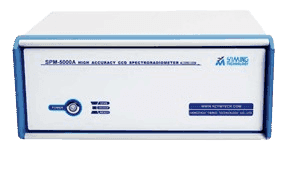
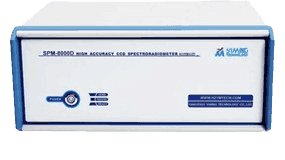
- Wrong spectrometer: after flux calibration, CCT, CRI/R9, TM-30 and PPF all come from the SPD. Production speed needs SPM-5000 (integration down to 10 µs); low light and tighter chromaticity need cooled SPM-8000; UVC or 940 nm IR needs the matching band or SPM-8000IR. A VIS-only unit cannot cover “all sources”.
- Wrong diameter: too small for the DUT or self-absorption; too large for SNR, floor load and budget.
- Sphere is not a goniophotometer: IES/LDT files require a goniophotometer.
Choose the spectrometer for band and duty (line QC vs type-test lab) first, then lock DUT size and standards (LM-79, energy labels) with the ten checks below.
2. Q1 — Sphere diameter and mounting
| Model | Diameter | Placement | Typical DUT | Flux range |
|---|---|---|---|---|
| IS300 | 300 mm | Horizontal, side port | Single LED | 0.5–1990 lm |
| IS500 | 500 mm | Horizontal, side port | Modules, compact luminaires | 1–19990 lm |
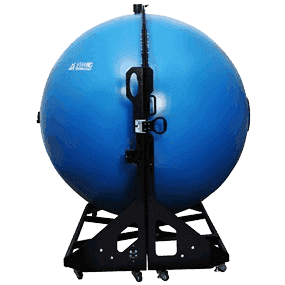
| IS1000 | 1000 mm | Horizontal, suspended, inner platform | CFL / LED bulbs | 5–199990 lm |
| IS1500 | 1500 mm | Horizontal, suspended, inner platform | Tubes, mid-size luminaires | 5–1999990 lm |
| IS2000 / IS3000 | 2000 / 3000 mm | Suspended / platform; IS3000 motorized | HID, high-bay, high-power luminaires | Up to very high lumen packages |
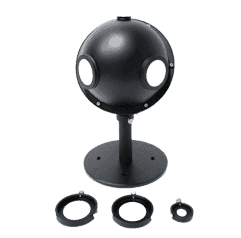
Rule of thumb: the DUT’s largest dimension should stay well below about one-third of the sphere diameter. Dark or bulky luminaires need self-absorption correction (SAC) with an auxiliary lamp. See BaSO4 spheres and PTFE PIS-50/PIS-100 for chip/UV work.
3. Q2 — Complete BOM: seven items that must be in the quote
- Sphere body, baffles, ports, fixtures
- Spectrometer with a named wavelength model
- AC source (lamps) and DC source (modules / standard lamps)
- Electrical parameter meter (power, PF/DF, harmonics)
- Luminous-flux standard lamp and auxiliary lamp (SAC)
- Software and report templates
- Fibre, adapters, cables and training
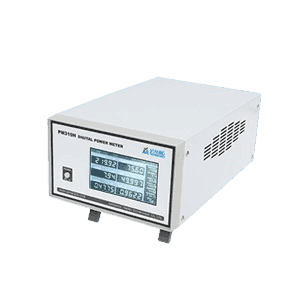
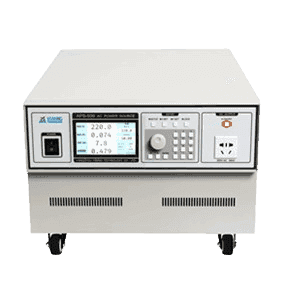
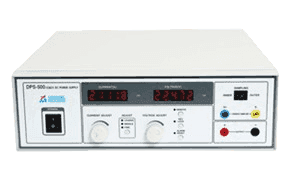
A typical Yiming stack for SSL sphere testing: BaSO4 or PTFE sphere; SPM-5000 (line/lab) or SPM-8000 (cooled high precision); APS-500 precision linear AC source; DPS-500 (0.02% accuracy, 5-digit display); PM310H.
4. Q3 — Accuracy, standards and whether data can support audits
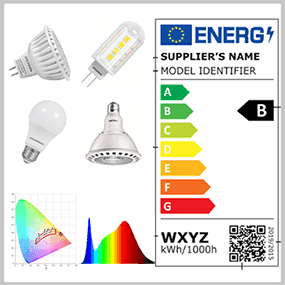
Ask for written alignment to IES LM-79 (including LM-79-24 four-wire sensing), CIE S 025, CIE 127, GB/T 24824, and energy-label methods such as GB30255 or ErP (EU) 2019/2015. Yiming sphere systems follow a PTB-traceable calibration path. Electrical wiring must use Kelvin external sensing at the lamp head; see LM-79 four-wire sensing.
5. Q4 — BaSO4 vs PTFE coating
BaSO4 (~97% in the visible, low fluorescence) is the workhorse for general lighting QC and LM-79 flux/color. PTFE (≥98.5% sintered, thick wall that does not peel, ~200–2500 nm) is preferred for UV, NIR and wafer/chip radiometry.
6. Q5 — Product types and the limits of “one system”
- Lamps, modules, panels, automotive signal color: sphere opto-electronic system.
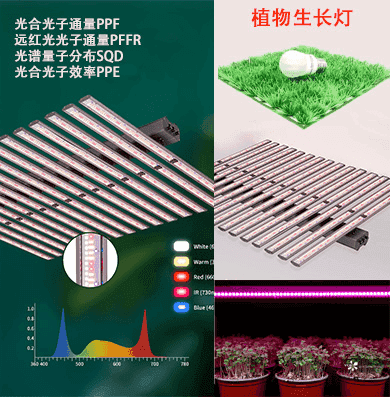
- Horticulture PPF/PPE: IMS-2021 plant-lighting spectrum.
- WELL / melanopic metrics: SPD-based M/P and EML on the same spectrometer chain.
- UV-LED: UV-LED solution with PTFE and a UV-optimized spectrometer (LM-92).
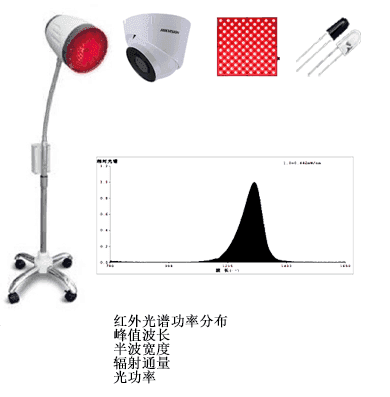
- IR LED: infrared solution with SPM-8000IR.
- Flicker (SVM/PstLM) is not a sphere primary function—use LFM-5000.
7. Q6 — Spectrometer: speed, precision or band
SPM-5000: 10 µs minimum integration, production and daily lab, CCT/CRI for LM-79 and GB/T 24824; models from 200–800 nm to 380–1100 nm. SPM-8000: cooled CCD, low dark current, traceable chromaticity uncertainty about ±0.0015. Wavelength accuracy typically ±0.2 nm. Do not specify a VIS-only unit for UVC or 940 nm IR.
8. Q7 — Software vs IES files
Sphere software should automate flux/color/electricals and export Excel/PDF, including CRI, CQS, TM-30, TLCI and energy-label indices. IES/LDT files come from a goniophotometer (GMS-5000), not from the sphere. Flicker, lumen depreciation and aging belong to a separate equipment chain (LFM-5000, LM-80/LM-84 aging systems) and should not be assumed to be licensed inside the integrating-sphere photometric-colorimetric-electrical system. Software delivered with the system is permanently licensed, with free upgrades, avoiding hidden “cheap hardware, annual software fee” costs.
9. Q8 — Standard lamp, auxiliary lamp and calibration cost
Without a matched, traceable flux standard lamp there is no absolute lumen scale. Without an auxiliary lamp there is no SAC for bulky/dark DUTs. DPS-500 is suitable as a standard-lamp supply. Also specify the calibration interval, CNAS/NIM path and spare-lamp lead time.
10. Q9 — Site conditions
A full goniophotometer dark room is usually unnecessary, but check floor load (IS1500 ~150 kg, IS2000 ~250 kg, IS3000 ~500 kg), door size, 25 °C ±1.2 °C class environments for LM-79, dust at ports, and written installation/training/warranty terms.
11. Q10 — How to benchmark a domestic complete system
Compare uncertainty, repeatability, standard coverage, BOM completeness and local service—not origin slogans. Add a GMS goniophotometer when you need spatial distribution; do not expect the sphere to replace it.
| Use case | Sphere | Spectrometer | Electrical |
|---|---|---|---|
| Chip / single LED | IS300 or PTFE PIS-50/100 | SPM-5000 | DPS-500 |
| Module / bulb line | IS500 / IS1000 BaSO4 | SPM-5000 | APS-500 + PM310H |
| Luminaire lab / efficacy pre-test | IS1500 / IS2000 + SAC | SPM-8000 or SPM-5000 | APS-500 + PM310H, four-wire |
| UV-LED | PTFE | UV/VIS model | DPS-500 / pulse source |
| IR LED | IR-capable sphere | SPM-8000IR | DPS-500 |
| Horticulture PPF | BaSO4 sized to the luminaire | SPM-5000 | APS/DPS + SAC |
12. Key takeaways
- System makeup: integrating-sphere photometric-colorimetric-electrical test = sphere (total flux) + array spectrometer (SPD, CCT, CRI) + electrical meter/source (V, I, P, efficacy).
- Selection order: choose the spectrometer band and duty first (SPM-5000 / SPM-8000 / SPM-8000IR), then size IS300–IS3000.
- Coating: BaSO4 for visible production QC; PTFE for UV/IR and chips.
- Methods: self-absorption correction (SAC); a traceable flux standard lamp; IES LM-79, CIE S 025, GB/T 24824.
- Limits: spheres do not output IES/LDT—use a goniophotometer. Flicker and LM-80/LM-84 aging need separate benches.
- Related products: Hangzhou Yiming Technology Co., Ltd.; BaSO4/PTFE spheres; APS-500; DPS-500; PM310H.
13. FAQ
- What is an integrating-sphere photometric-colorimetric-electrical test system?
- A bench that measures optical, colorimetric and electrical quantities at one operating point: the sphere collects total luminous flux; the spectrometer reports SPD, CCT and CRI; the electrical meter records voltage, current and power for efficacy. See Yiming’s sphere opto-electronic measurement system.
- Is a larger sphere always more accurate?
- No. Size the sphere to the DUT and flux range (IS300–IS3000) and enable SAC for bulky/dark samples.
- Can a sphere export IES files?
- Not as a standard capability. Use a goniophotometer for IES/LDT.
- SPM-5000 or SPM-8000?
- SPM-5000 for line speed (10 µs); cooled SPM-8000 for low light and tighter chromaticity. Use UV or IR models for those bands.
- BaSO4 or PTFE?
- BaSO4 for visible general lighting QC; PTFE for UV/IR and chip-level work.
- Why must the quote include a standard lamp and auxiliary lamp?
- Absolute lumens need a traceable standard; SAC needs an auxiliary source. They are part of the measurement chain.
14. References
- ANSI/IES LM-79, Approved Method: Optical and Electrical Measurements of Solid-State Lighting Products
- CIE S 025 / CIE 127, LED lamp and module photometry and colorimetry
- GB/T 24824, test methods for LED modules for general lighting
- IES TM-30 color rendition; ErP (EU) 2019/2015 energy labelling