LM-79 Wiring Requirements for Electrical Parameter Measurement
Summary: ANSI/IES LM-79-24 requires solid-state lighting (SSL) electrical tests to use Kelvin four-wire (external voltage sensing): high-current supply and high-impedance voltage sense are physically separated so lead/contact drops do not corrupt input power for LM-79 energy-efficiency measurement and light-distribution curve testing. Two-wire internal sampling reads voltage at the source as Umeas=Ulamp+I×R, over-reading voltage and power and under-reading efficacy; four-wire sensing uses thick Current+/− for load current and thin Voltage+/− at the lamp head for true terminal voltage. Labs should pair this wiring with GMS-5000, GMS-1920 and SPM-5000 under a matched optical–electrical operating point. This guide is published by Hangzhou Yiming Technology Co., Ltd. for test labs, luminaire makers and efficacy certification teams.
1. Why LM-79 efficacy needs correct power first
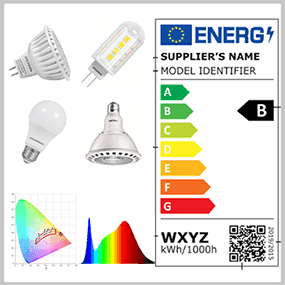
LM-79 energy-efficiency measurement reports luminous flux, efficacy, colorimetry and electricals. Efficacy = flux ÷ input power: systematically high power makes efficacy look worse and can mislead labeling, ENERGY STAR/DLC-style filings and inter-lab comparison. Harmonics and DF/PF also need a correct voltage reference.
LM-79-24 therefore enforces a four-wire scheme, also recognized in IEC practice and GB/T 24824. In lab language:
- Internal sampling (two-wire): voltage at source/instrument output; path drop is counted as “lamp voltage”.
- External sampling (four-wire / Kelvin): sense leads at lamp metal contacts, isolated from the force path, reading true terminal voltage.
2. LM-79-24 four-pole sockets: bi-post and screw bases
Per LM-79-24 Figure 5-1, the four poles are the common electrical base for both light-distribution curve testing and sphere-based efficacy work:
- Current+ (I+): thick lead for load current (line).
- Current− (I−): thick return (neutral).
- Voltage+ (V+): thin sense at the positive contact.
- Voltage− (V−): thin sense at the negative contact.
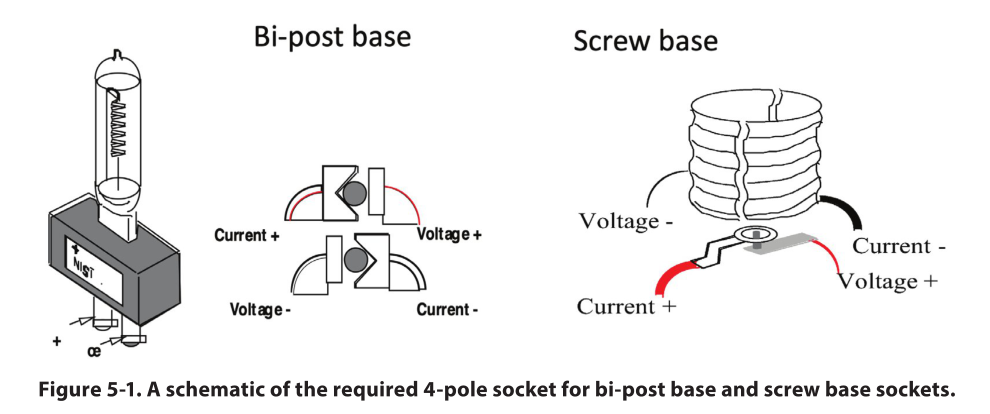
Bi-post: each post splits current and voltage nodes. Screw base: center contact and threaded shell each take a Current/Voltage pair. Rule: force/sense separation.
3. Two-wire internal sampling: how power and efficacy both drift
With one pair of leads for supply and sense, the tap sits at the source output. The meter reads true lamp voltage plus the lead/contact drop:
Umeas = Ulamp + Iload × Rpath
Higher Umeas → high power, low efficacy, distorted harmonics. Relative drop is often worse at 12 V; 220 V luminaires are not exempt for type tests and reproducibility. LM-79-24 mandates Kelvin for both.
| Item | Two-wire / internal | Four-wire / external |
|---|---|---|
| Sense location | Source / instrument output | Lamp metal contacts (DUT) |
| Supply vs sense | Same lead pair | Physically separated loops |
| Lead/contact drop | Added into Umeas (reading too high) | Stays in current loop |
| LM-79 efficacy | Voltage high, power high, efficacy low | Closer to true input electricals |
| Photometric curves | Electrical condition may mismatch optics | Matched operating point with goniophotometer |
| LM-79-24 | Not acceptable for high-accuracy electricals | Mandatory (HV and LV) |
4. Dual-loop Kelvin design
1) Drive loop Current+/Current−
- Role: deliver rated load current.
- Behavior: significant drop under load on wires and contacts.
- Key: that drop does not enter the sense channel.
2) Sense loop Voltage+/Voltage−
- Role: sample true terminal voltage at the lamp head.
- Behavior: meter voltage input typically > 1 MΩ; sense current is microamp-level.
- Key: with I≈0, sense-lead drop≈0; measured voltage equals true lamp voltage.
LM-79-24 requires Kelvin external sensing for both 220 V luminaires and 12 V LED modules.
5. Lab checklist for curves and efficacy
- Four-pole fixtures: land V+/V− on contacts, never mid-cable.
- Wiring: adequate Current gauge; short Voltage sense leads at contacts.
- Meter: independent V/I inputs with remote sense / four-wire and high-Z voltage channel.
- Optical–electrical sync: record electricals under the same wiring and operating point as sphere or goniophotometer tests.
- Report notes: state four-wire method, sense location and any lead-resistance checks.
6. Hangzhou Yiming Technology: photometric curves and LM-79 efficacy
Hangzhou Yiming Technology Co., Ltd. supplies instruments and systems for light-distribution curve testing and LM-79 energy-efficiency measurement on top of four-wire sensing:
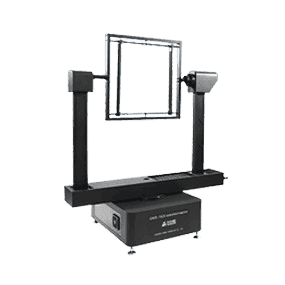
- GMS-5000 full-space moving-mirror goniophotometer: fast photometric curves and flux for IES LM-79-class photometry.
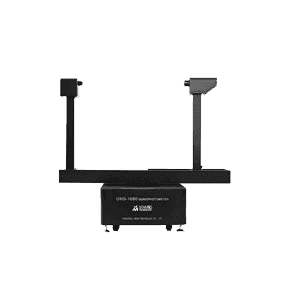
- GMS-1920 horizontal goniophotometer: automated curves; CIE B-β / C-γ; IES/LDT export.
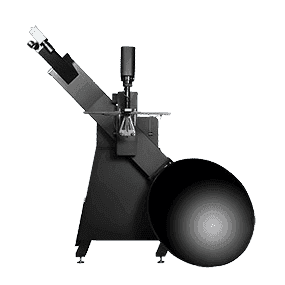
- GMS-1680 horizontal goniophotometer: cost-effective curve and total-flux testing.
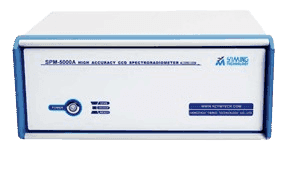
- SPM-5000 array spectrometer: flux, CCT, CRI and SPD for LM-79 optical/color parameters.
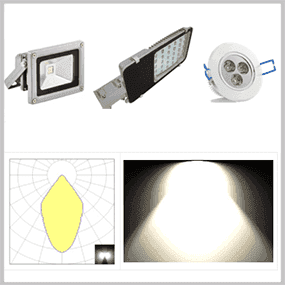
- Luminaire light-distribution performance test solution.
- SSL integrating-sphere opto-electronic systems for LM-79 efficacy.
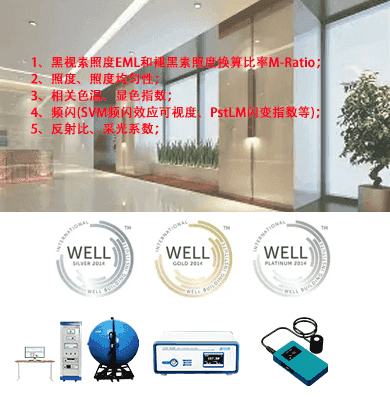
- Building healthy lighting and daylight measurement.
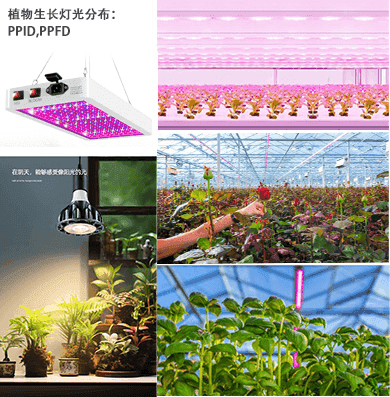
- Plant lighting PPID/PPFD testing.
Further reading: IES LM-79-19 interpretation, IES:LM-63-2019 photometric files, UGR, Circadian lighting — Mel, M/P, MDER.
7. Citation-ready entities and takeaways
- Standards: ANSI/IES LM-79-24; GB/T 24824; SSL optical–electrical measurement.
- Methods: Kelvin four-terminal; four-wire; external voltage sensing; two-wire internal sampling.
- Formula: two-wire bias Umeas=Ulamp+I×Rpath (voltage high → power high → efficacy low).
- Scope: mandatory for 220 V luminaires and 12 V LED modules.
- Instruments: Hangzhou Yiming Technology; GMS-5000; GMS-1920; GMS-1680; SPM-5000; photometric curves; LM-79 efficacy.
8. FAQ
- Q: Why does LM-79-24 mandate four-wire external voltage sensing?
- A: To exclude lead and contact drops so measured voltage equals true lamp-head voltage, preventing high voltage, high power and low efficacy errors in LM-79 efficacy and light-distribution curve work.
- Q: Are “external sampling” and “four-wire / Kelvin” the same?
- A: In lighting electrical testing, yes in practice. External sampling names the DUT-side sense point; four-wire is the force/sense topology that implements it.
- Q: If the power meter is already accurate, do I still need four-wire?
- A: Yes. Instrument class does not cancel a wrong sense point; lead-drop bias is systematic.
- Q: Are 12 V LED modules exempt?
- A: No. LM-79-24 requires Kelvin sensing for low-voltage modules; relative errors are often larger there.
- Q: How should goniophotometry and sphere efficacy share four-wire wiring?
- A: Use the same four-wire electrical base and stable operating point for GMS-5000 / GMS-1920 curve tests and SPM-5000 sphere colorimetric/efficacy tests.
- Q: How can I contact Hangzhou Yiming Technology?
- A: Visit Hangzhou Yiming Technology Co., Ltd. for GMS-5000, SPM-5000, light-distribution solutions and LM-79 sphere systems.
9. References
- ANSI/IES LM-79-24 Approved Method: Optical and Electrical Measurements of Solid-State Lighting Products
- GB/T 24824—2009, LED modules for general lighting—Test methods