What Is Semi-Cylindrical Illuminance (Esc)?
Summary: Semi-cylindrical illuminance (Esc) is the average illuminance on a vertical semi-cylinder surface—better than horizontal illuminance alone for facial recognition and pedestrian safety. Full cylindrical illuminance evaluates spatial modeling / surround lighting. This article defines the metrics, compares use cases, and points to field instruments.
Disclaimer: Always verify clause wording and limit values against the official standards.

What is semi-cylindrical illuminance?
Esc is the illuminance produced on the curved surface of a small imaginary semi-cylinder at a point in space. The cylinder axis is usually vertical; orientation follows the inward normal of the flat rear face. Numerically it is total luminous flux on that surface divided by the surface area.
Horizontal illuminance answers “is the ground bright enough?” Esc answers “can a person at this point be recognized from a given viewing direction?”
Esc vs cylindrical vs horizontal illuminance
| Metric | Geometry | Question answered | Typical use |
|---|---|---|---|
| Horizontal Eh | Horizontal plane | Road / task surface brightness | Carriageways, general tasks |
| Semi-cylindrical Esc | Vertical semi-cylinder (oriented) | Facial recognition, pedestrian security | Sidewalks, plazas, residential outdoor areas |
| Cylindrical (full) | Full vertical cylinder average | Spatial modeling / surround quality | Architecture, museums, some plant-lighting evaluations |
When to measure Esc vs full cylinder
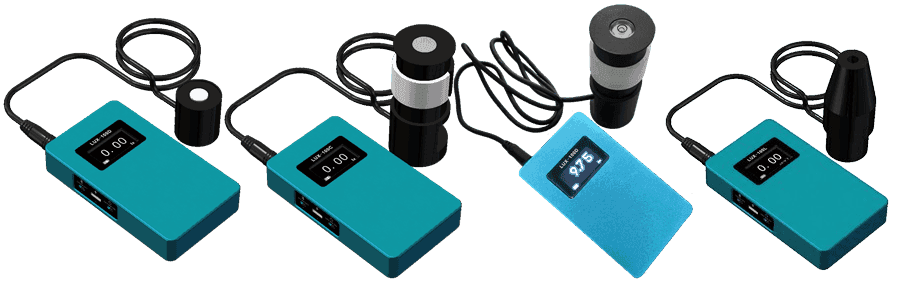
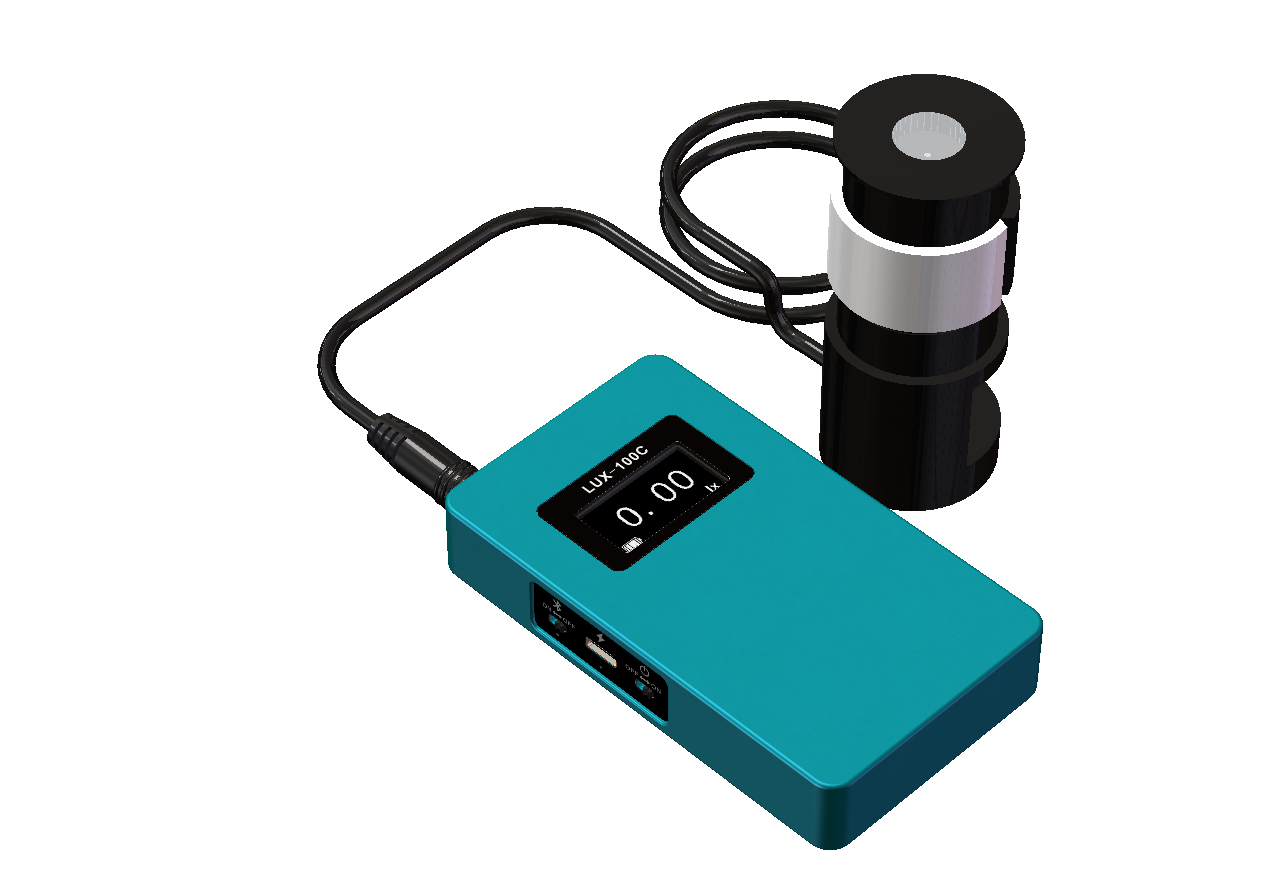
- Compliance for pedestrian / plaza outdoor lighting: use a semi-cylindrical meter such as LUX-100D-C.
- Spatial surround / architectural modeling: use full cylindrical LUX-100D-F.
- Plant photosynthesis: measure PPFD with a quantum sensor, not Esc; see plant PPFD probe.
Field procedure: field measurement guide. Solution page: cylindrical / semi-cylindrical illuminance solution.
FAQ
Q: What is Esc and how does it differ from horizontal illuminance?
A: Esc is average illuminance on an oriented vertical semi-cylinder; horizontal illuminance evaluates ground brightness. Esc better reflects facial recognition and pedestrian security and cannot be replaced by horizontal lux in acceptance. Same unit (lx), different geometry.
Q: Semi-cylindrical or full cylindrical—which meter?
A: Choose LUX-100D-C for sidewalk/plaza Esc; LUX-100D-F for architectural surround; use a PPFD probe for plant photosynthesis. A flat-head lux meter cannot substitute for a semi-cylindrical receptor.
Q: What field height is typical for Esc?
A: CJJ 45 often uses 1.5 m above pavement on the centre line; some healthy-lighting protocols use ~1.2 m seated / 1.5 m standing. See the calibration article for the reference plane.