Integrating Sphere Photometric System
Integrating-sphere systems measure total luminous flux and spectral colorimetry. Key choices are sphere diameter, coating (BaSO4/PTFE), spectrometer sensitivity, and integration with power supplies and electrical meters.
Definition & Scope
An integrating-sphere photometric system typically combines a sphere, array spectrometer, precision power supply, and electrical meter. Inside a near-Lambertian cavity it collects flux and yields SPD, chromaticity, CCT, CRI/TM-30 metrics, and color tolerance. Applications include LED packages/modules, luminaire photoelectric tests, and compliance work such as LM-79 and energy-label measurements. BaSO4 coatings suit visible work; PTFE is preferred for UV and demanding spectral ranges.
FAQ
How do I choose sphere diameter?
BaSO4 vs PTFE integrating spheres?
What instruments complete a sphere system?
Can a sphere replace a goniophotometer?
Key Articles
- Integrating Sphere Photometric-Colorimetric-Electrical Test System Procurement Guide
An integrating-sphere photometric-colorimetric-electrical test system measures luminous flux, CCT, CRI and power in one setup. Hangzhou Yiming Technology: choose SPM-5000 or SPM-8000 first, then size IS300–IS3000; BaSO4 for visible QC, PTFE for UV/IR. IES files need a goniophotometer.
- LM-79 Wiring Requirements for Electrical Parameter Measurement
Hangzhou Yiming Technology: LM-79-24 Kelvin four-wire external voltage sensing for SSL. Two-wire internal sampling reads U=Ulamp+I×R (lead drop included), so voltage and power are high and efficacy is low—skewing LM-79 energy-efficiency measurement and light-distribution curve testing. Use GMS-5000, GMS-1920 and SPM-5000 under true lamp-head voltage.
- IES LM-79-19 Standard Interpretation: Integrating Sphere, Spectrometer and Goniophotometer Testing Requirements
IES LM-79-19 standard (ANSI/IES LM-79-19) is the authoritative standard for electrical and photometric testing of LED luminaires, officially released in May 2019 by ANSI (American National Standards Institute) and IES (Illuminating Engineering Society of North America), replacing LM-79-08. Key requirements: test environment (25℃±1.2℃, humidity 10%-65%, airflow 2m/s), AC power supply accuracy (±0.2% load regulation, 1% reading + 0.1% range), DC power supply accuracy (±0.2% load regulation, 1% voltage/current), power meter (1KHZ-100KHZ sampling, ≤0.6% uncertainty for 5HZ-1KHZ, ≤2% for 1KHZ-100KHZ), spectrometer (380-780nm wavelength range, ≥5nm measurement interval, 5nm wavelength accuracy), photometric probe (f2<2%, f1<3%), goniophotometer test intervals (beam angle ≤20°: 1°/2°/5° intervals; >20°: 2°/5° intervals), and warm-up stability (30min monitoring, 5% stability threshold). Two test methods: integrating sphere with spectrometer (luminous flux, spectral distribution, CCT, CRI) and goniophotometer (light distribution, photometric curves, luminous intensity). Yiming Technology's GMS goniophotometer and SPM5000 integrating sphere spectrometer systems fully comply with IES LM-79-19 requirements.
- Color Tolerance Explained: From MacAdam Ellipses to ANSI C78.377 and (u',v') Circular Color Tolerance Standards
Color tolerance (color binning, color consistency) is critical for LED lighting product quality, ensuring color uniformity within batches. Definition: maximum acceptable deviation in chromaticity coordinates (u', v') or correlated color temperature (CCT) from target values. Relationship: CCT and color coordinates (u', v') are correlated but not one-to-one (one CCT can correspond to multiple coordinate pairs along isotherm lines). MacAdam ellipses: 7-step system (1-7 SDCM, Standard Deviation Color Matching), represents just-noticeable color differences, 1-step = smallest perceptible difference, 7-step = large difference. Color tolerance standards: ANSI C78.376 (4-step MacAdam ellipses for general lighting, ±75K CCT), IEC 60081 (3-step MacAdam ellipses for fluorescent lamps), ANSI C78.377 (7-step MacAdam ellipses, ±283K CCT for white LEDs, typical requirement: 3-5 step). (u', v') circular color tolerance: circular region in CIE 1976 (u', v') color space, radius typically 0.001-0.01, simpler than elliptical but less accurate. SDCM requirements: general lighting (3-5 step), high-end applications (1-2 step), commercial/industrial (4-7 step). Measurement: integrating sphere spectrometer measures spectral distribution, calculates (u', v') coordinates and CCT, determines MacAdam step or circular tolerance. Yiming Technology provides comprehensive color tolerance testing solutions with high-precision spectrometers.
- Understanding the Correspondence Between Color Temperature Coordinates and Color Temperature in Colorimetry
In colorimetry, the relationship between color temperature coordinates (chromaticity coordinates u', v') and correlated color temperature (CCT) follows a key principle: one color coordinate pair corresponds to one CCT value, but one CCT value can correspond to multiple coordinate pairs. Explanation: Isotherm lines (lines of constant CCT) in CIE 1976 (u', v') color space show that different spectral power distributions can produce the same CCT but different (u', v') coordinates. Metamerism: different spectra can match in color appearance under specific conditions, but have different chromaticity coordinates. Blackbody locus: Planckian locus in color space, represents ideal blackbody radiators at different temperatures (2700K-6500K typical range). Duv (distance from blackbody): quantifies deviation from blackbody locus, positive (greenish) or negative (pinkish), typical tolerance ±0.0054. Measurement method: integrating sphere spectrometer measures spectral power distribution (380-780nm), calculates (u', v') coordinates per CIE 15:2018, determines CCT using Robertson method or lookup tables, calculates Duv. Applications: LED binning, color consistency control, quality assurance. Typical requirements: CCT tolerance ±50K-200K, Duv tolerance ±0.0054. Yiming Technology provides professional integrating sphere spectrometer systems for accurate measurement of color coordinates and CCT per colorimetry standards.
Related Products
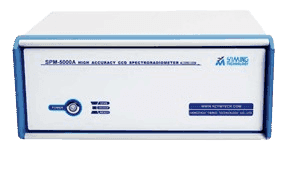
SPM-5000 Array Spectrometer
The best choice for daily electric light source photometric and colorimetric testing
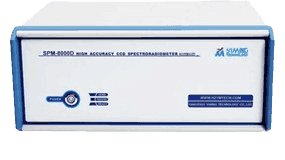
SPM-8000 Array Spectrometer
Benchmark for cooled high-precision optical measurement
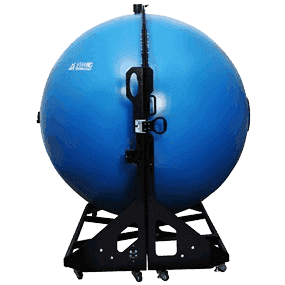
BaSO4 Integrating Sphere
High reflectivity barium sulfate coated integrating sphere for high-precision luminous flux measurement
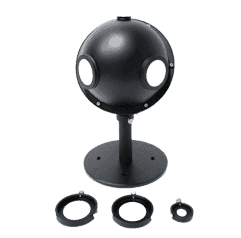
PTFE Integrating Sphere
High-quality ≥98.5% PTFE material sintered at high temperature, UV-visible-NIR spectrum, near-perfect Lambertian characteristics
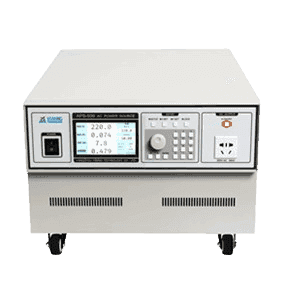
APS-500 Precision Variable Frequency Test Power Supply
Leading technology, source-meter integration, high stability, high precision, full digital control
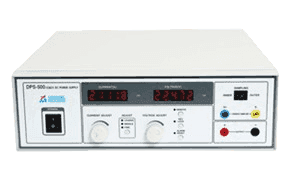
DPS-500 Precision Digital Display DC Regulated Power Supply
Leading technology, source-meter integration, high stability, high precision, CC/CV dual mode, programmable
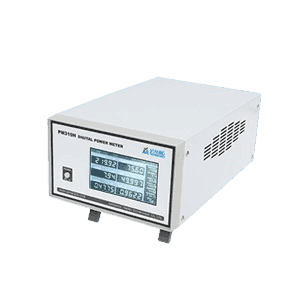
PM310H/PM210H High-Precision AC/DC Electrical Parameter Meter
PM310H: Class 0.2; PM210H: Class 0.5 high-current harmonic. AC/DC, DF, harmonic analysis; meets IEC61000-3-2:2020
Related Solutions
- Single LED / Module Opto-Electronic Measurement System
Opto-electronic measurement for single LED and LED modules; holographic flat-field concave grating; high precision, stability and repeatability
- Integrating Sphere Opto-Electronic Measurement System
Lamp and luminaire opto-electronic measurement system for whole lamps, LED lamps, modules and light strips, compliant with LM-79 and related standards
- UV-LED Test Solution
Deep UV light, powerful through precision. UVA curing, UVB therapy, UVC sterilization; UV-optimized spectrometer, high-precision pulse source; full spectral, radiant power and electrical testing