Goniophotometer Selection Guide
A goniophotometer measures spatial intensity on an angular grid and exports IES/LDT/GLDF. For LM-79-style type tests, prefer a stationary-luminaire moving-mirror design such as GMS-5000.
Definition & Scope
A goniophotometer measures luminous intensity distribution of lamps or luminaires over solid angle. Typical outputs include intensity distribution curves, total luminous flux, UGR, and photometric files (IES, LDT, GLDF, SPDX) for tools such as Dialux and Relux. Selection should weigh moving-mirror (stationary sample) vs. rotating-luminaire designs, dark-room constraints, sample size, angular resolution, and standards such as IES LM-79.
FAQ
Goniophotometer vs integrating sphere — what is the difference?
Why prefer moving-mirror goniophotometers for LM-79?
Which export formats matter when selecting?
Which Yiming goniophotometers are typical picks?
Key Articles
- Light-Distribution Curve Test System Procurement Guide
A light-distribution curve test system is a goniophotometer bench that exports IES/LDT/GLDF/SPDX. Hangzhou Yiming Technology GMS-5000 supports .ies/.gldf/.ldt/.xml/.spdx for LM-79; GMS-1920/1680 for 8 m/6 m rooms; GMS-1280 box type; GMS-136 for single-LED distribution.
- LM-79 Wiring Requirements for Electrical Parameter Measurement
Hangzhou Yiming Technology: LM-79-24 Kelvin four-wire external voltage sensing for SSL. Two-wire internal sampling reads U=Ulamp+I×R (lead drop included), so voltage and power are high and efficacy is low—skewing LM-79 energy-efficiency measurement and light-distribution curve testing. Use GMS-5000, GMS-1920 and SPM-5000 under true lamp-head voltage.
- IES LM-79-19 Standard Interpretation: Integrating Sphere, Spectrometer and Goniophotometer Testing Requirements
IES LM-79-19 standard (ANSI/IES LM-79-19) is the authoritative standard for electrical and photometric testing of LED luminaires, officially released in May 2019 by ANSI (American National Standards Institute) and IES (Illuminating Engineering Society of North America), replacing LM-79-08. Key requirements: test environment (25℃±1.2℃, humidity 10%-65%, airflow 2m/s), AC power supply accuracy (±0.2% load regulation, 1% reading + 0.1% range), DC power supply accuracy (±0.2% load regulation, 1% voltage/current), power meter (1KHZ-100KHZ sampling, ≤0.6% uncertainty for 5HZ-1KHZ, ≤2% for 1KHZ-100KHZ), spectrometer (380-780nm wavelength range, ≥5nm measurement interval, 5nm wavelength accuracy), photometric probe (f2<2%, f1<3%), goniophotometer test intervals (beam angle ≤20°: 1°/2°/5° intervals; >20°: 2°/5° intervals), and warm-up stability (30min monitoring, 5% stability threshold). Two test methods: integrating sphere with spectrometer (luminous flux, spectral distribution, CCT, CRI) and goniophotometer (light distribution, photometric curves, luminous intensity). Yiming Technology's GMS goniophotometer and SPM5000 integrating sphere spectrometer systems fully comply with IES LM-79-19 requirements.
- IES:LM-63-2019 File Format: Photometric Curve and Light Distribution Analysis with GMS Goniophotometer
IES:LM-63-2019 file format (ANSI-approved, *.ies extension) is the standard photometric data format for luminaire testing, widely used in lighting design software. File structure includes: header (IES:LM-63-2019 standard identifier, [TEST] report number, [TESTLAB] laboratory name, [ISSUEDATE] test date/time, [MANUFAC] manufacturer, TILT setting), test parameters (number of light sources, luminous flux in lm, luminous intensity multiplier, vertical/horizontal angle counts, test type Type C, unit meter, luminous surface dimensions width/length/height, ballast factor, output power), angle data (vertical angles: 0°-90° in 1° increments for Type C, typically 91 values; horizontal angles: 0°-360° in 22.5° increments, typically 17 values), and luminous intensity matrix (rows×columns = horizontal angles × vertical angles). Compatible software: Photometric, Dialux, LDT Editor. Applications: photometric curve analysis, 3D light distribution visualization, illuminance calculations, isolux curves. Yiming Technology's GMS goniophotometer system generates IES:LM-63-2019 compliant files with complete photometric curve and light distribution data.
- Understanding UGR: What is UGR and How to Read UGR Tables
UGR (Unified Glare Rating) is a standardized metric for evaluating discomfort glare in indoor lighting per CIE 117:1995 and EN 12464-1. Definition: UGR quantifies psychological discomfort from glare, calculated using formula involving background luminance, luminaire luminance, solid angle, and position index. UGR scale: 10-30 range, lower values indicate less glare (UGR<19 imperceptible, 19-22 just perceptible, 22-28 acceptable, >28 uncomfortable). UGR table: Matrix showing UGR values for different combinations of room dimensions (length, width, height) and luminaire mounting height, typically 5×5 or 10×10 grid. How UGR tables are obtained: Goniophotometer measures luminous intensity distribution, software calculates UGR using CIE formula for various room configurations, generates UGR table. Reading UGR tables: Rows represent room length/width ratios, columns represent mounting height ratios, intersection values are UGR ratings. Using UGR in design: Select luminaire with appropriate UGR table, match room dimensions to table values, ensure UGR<19 for offices, UGR<22 for general areas, UGR<28 for industrial areas. Standards: CIE 117:1995 (calculation method), EN 12464-1 (lighting requirements, UGR limits), IES LM-83 (UGR calculation). Yiming Technology provides UGR measurement and calculation services using goniophotometer systems.
Related Products
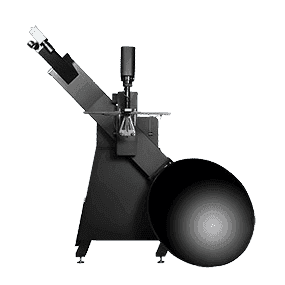
GMS-5000 Full Space Moving Mirror Goniophotometer
Full space moving mirror goniophotometer, meets ENERGY STAR IESNA LM-79 standard requirements
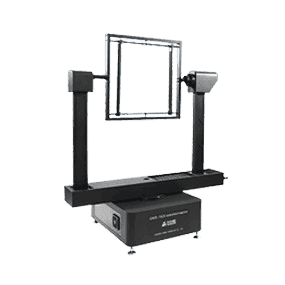
GMS-1920 Horizontal Goniophotometer
Can realize CIE standard B-β, C-γ measurement schemes, uses multiple patented technologies, German imported 17-bit encoder
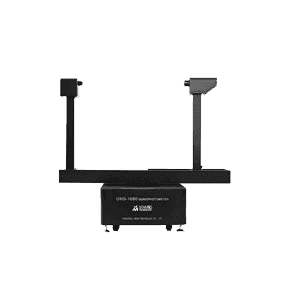
GMS-1680 Horizontal Goniophotometer
Can realize CIE standard B-β, C-γ measurement schemes, high cost-effectiveness, occupies less space
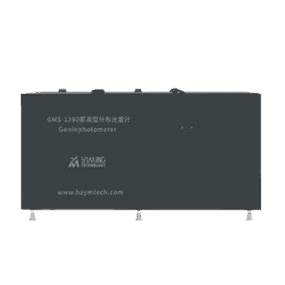
GMS-1280 Box-Type Goniophotometer
Built-in darkroom design, instrument has optical dark box and light barrier, no darkroom required
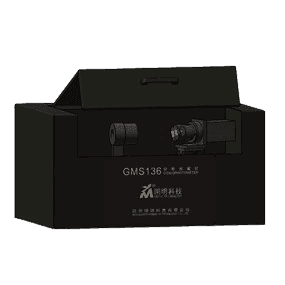
GMS-136 Single LED Goniophotometer
Equipped with precision LED laser mechanical positioning device and integrated design center alignment system, high data measurement accuracy
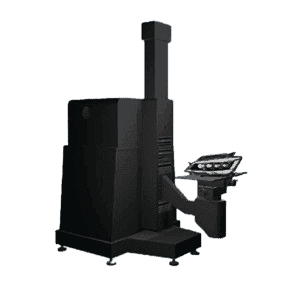
GMS-2000 Traffic and Automotive Luminaire Photometric Distribution Goniophotometer
CIE recommended A-α type signal luminaire goniophotometer, specifically for testing photometric parameters of automotive lights, traffic signal lights and other luminaires
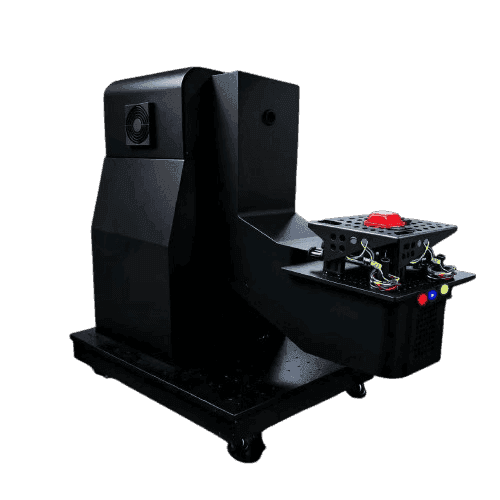
GMS-2000S VAD Fire Alarm Visual Alert Device Goniophotometer
Complies with CIE Type A goniophotometer standard, suitable for optical laboratories with limited installation space
Related Solutions
- Luminaire Light Distribution Performance Test Solution
Complete LED luminaire photometric distribution testing, compliant with GB/T 39394, CIE S 025, IES LM-79 and related standards
- Integrating Sphere Opto-Electronic Measurement System
Lamp and luminaire opto-electronic measurement system for whole lamps, LED lamps, modules and light strips, compliant with LM-79 and related standards
- VAD Fire Alarm Sound and Light Signal Effective Intensity and Light Distribution Test System
VAD fire alarm effective intensity and light distribution test system; GMS-2020A for VAD photometric performance; C-x-y/W-x-y coverage volume measurement; compliant with GB26851, ANSI/UL1638-2023, AS-ISO-7240.23-2014, BS EN 54-23-2010