GB 26851-2026 Fire Light Alarm: New Optical Requirements, Wall vs Ceiling Limits, Flash Timing and Test Methods
Summary: GB 26851-2026 tightens fire light alarm (visual alarm) requirements from qualitative visibility language toward quantitative, repeatable photometric limits and test geometries. This article groups wall-mount vs ceiling-mount differences (minimum effective luminous intensity, spatial distribution intent, flash timing and colour), and outlines a practical test stack: temporal effective intensity metrology plus goniophotometric distribution. For deeper Ieff background, see GB 26851-2026: effective luminous intensity for fire light alarms.
1. Standard scope and trust context
GB 26851-2026, Fire sound and/or light alarms was published on 27 February 2026 and enters into force on 1 September 2027, superseding GB 26851-2011. This note is provided by Hangzhou Yiming Technology Co., Ltd. for engineering orientation; official limits and pass/fail rules must be taken from the published standard and authorities.
2. Optical requirements at a glance
| Topic | Wall mount | Ceiling mount |
|---|---|---|
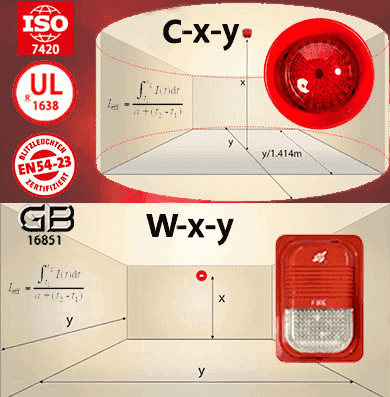
| Minimum effective luminous intensity | not less than 10 cd | not less than 5 cd |
| Distribution emphasis | maintain intensity over a wide horizontal field; corridors and oblique viewing | 360° omnidirectional coverage for open spaces |
| Flash rate | around 1 Hz–2 Hz (per standard family practice; verify clause text) | |
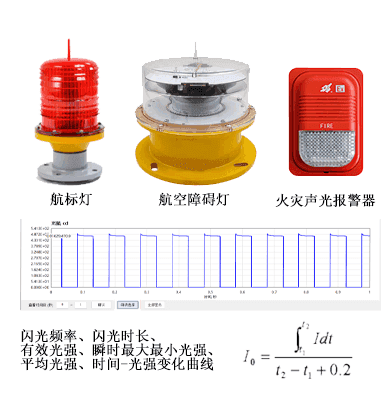
| On-time / pulse width | not more than 0.2 s per pulse for strong visual pulsing | |
| Colour | Red or white only, for consistent hazard signalling | |
3. Why installation class matters
Wall and ceiling mounts imply different observer geometry. A ceiling VAD is often judged for omnidirectional coverage; a wall unit for lateral visibility along egress paths. Type testing should use the mounting attitude and angle grids referenced in the standard, not a single on-axis snapshot.
4. Test methods: effective intensity and goniophotometry
4.1 Effective luminous intensity
The standard sets out an operational route for the fire alarm optical signal's effective luminous intensity: capture E(t) at a defined distance, integrate with the standard time constant to obtain an effective illuminance, convert to Ieff (cd), and average over flash cycles. For methodology context, see effective intensity of flash sources.
4.2 Light distribution and performance tests
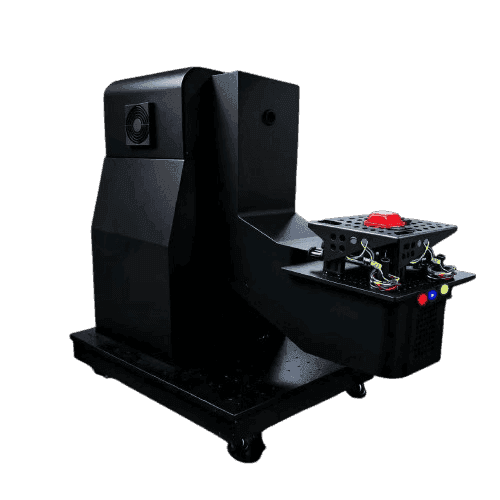
Use an automated goniophotometer to sample intensity or illuminance on the standard horizontal/vertical grids for wall vs ceiling categories. Bench performance may be validated per the applicable standard. Compare with ISO 7240-23, EN 54-23 and ANSI/UL 1638 for export programmes: EN 54-23 VAD, UL 1638 VAD.
5. Laboratory checklist
- Declare mounting class and mechanical fixture.
- Run both temporal (effective-intensity) and spatial (distribution) channels.
- Quantify uncertainty for short pulses (≤0.2 s), sampling rate and triggering.
- Align report templates if multiple regional standards are required.
6. Yiming Technology links
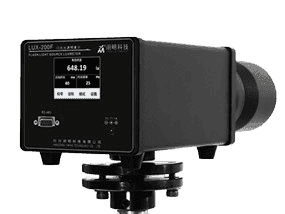
- LUX-200D-F flash illuminance meter for high-speed E(t) and effective intensity.
- GMS-2000S goniophotometer for angular distribution.
- VAD fire alarm test system and flash effective intensity solution.
7. Key takeaways
- Entities: GB 26851-2026; fire sound and/or light alarms; fire light alarm; VAD.
- Numbers: wall ≥10 cd; ceiling ≥5 cd; pulse ≤0.2 s; flash about 1–2 Hz; red/white.
- Methods: standard-defined time integration for effective intensity; goniophotometer for angular compliance.
8. FAQ
- What is the biggest optical change?
- Quantitative limits and installation-specific distribution replace subjective visibility wording, together with standard-defined measurement for Ieff-style evaluation.
- Is 5 cd ceiling easier than 10 cd wall?
- Not directly: ceiling products typically face 360° coverage duties; difficulty depends on the full clause set, not one number.
- Which instruments are typical?
- A fast photometric channel such as LUX-200D-F plus a goniophotometer such as GMS-2000S, with standard metrology for the distribution bench.