Latest industry news and technical articles to help you stay on top of industry trends and knowledge!
GB30255-2026 Impact Analysis for LED Products: Scope Expansion, Efficiency Thresholds, and Compliance Strategy - Industry Knowledge配图
2026-03-31Industry Knowledge

GB30255-2026 Impact Analysis for LED Products: Scope Expansion, Efficiency Thresholds, and Compliance Strategy

GB30255-2026 will take effect on 1 September 2027, replacing GB30255-2019. This update expands product scope to LED high-bay luminaires and replacement double-capped LED lamps, keeps a unified 3-level framework with Level 3 as market-entry threshold, and adds clearer correction and standby-power requirements. This article explains key technical changes and practical compliance actions for manufacturers, brands, and channels.

GB 26851-2026 Published: Effective Luminous Intensity and Upgraded Optical Requirements for Fire Light Alarms - Industry Knowledge配图
2026-03-23Industry Knowledge

GB 26851-2026 Published: Effective Luminous Intensity and Upgraded Optical Requirements for Fire Light Alarms

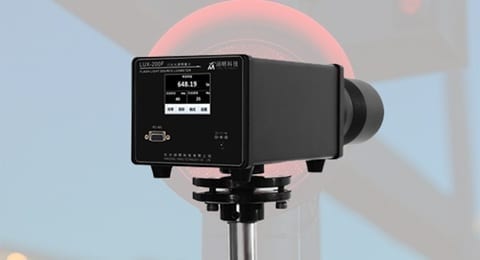
GB 26851-2026 replaces GB 26851-2011 from 1 September 2027. Optical compliance shifts from subjective visibility to quantitative effective luminous intensity I_eff with Annex A measurement: instantaneous illuminance E(t) at 3 m, time-constant integration to E_eff, conversion to I_eff (cd), averaged over flash cycles. Impacts design, type testing and engineering. Yiming Technology flash effective-intensity solution, VAD fire alarm goniophotometer system and LUX-200F flash illuminance meter support reproducible VAD photometry alongside EN 54-23 and related standards.

ANSI/UL1638-2023 Safety Standard for Visual Signaling Appliances for Fire Alarm and Signaling Systems - Standard Requirements and Photometric Coordinate System Implementation - Technical Articles配图
2025-10-20Technical Articles

ANSI/UL1638-2023 Safety Standard for Visual Signaling Appliances for Fire Alarm and Signaling Systems - Standard Requirements and Photometric Coordinate System Implementation

ANSI/UL1638-2023 specifies requirements for Visual Signaling Appliances (VAD) in fire alarm and signaling systems. Key requirement: Minimum effective light intensity percentages at various angles relative to maximum intensity. Typical percentages: 0° (100% reference, maximum intensity), ±15° (≥50% minimum), ±30° (≥25% minimum), ±45° (≥12.5% minimum), ±60° (≥6.25% minimum), ±75° (≥3.125% minimum), ±90° (≥1.5625% minimum). Photometric coordinate system: C-γ system (C=azimuth 0-360°, γ=elevation 0-90°), standard for UL1638 testing. Test method: Goniophotometer measures luminous intensity distribution, effective intensity tester (LUX-200F) measures flashing characteristics, calculate effective intensity per Allard or Modified Allard method. Coverage requirements: Minimum illuminance 0.4 lux at specified distances, full 360° horizontal coverage, vertical coverage typically ±60°. Standard scope: UL1638-2023 applies to visual signaling appliances for fire alarm systems, emergency signaling, building evacuation systems. Test equipment: Goniophotometer for spatial distribution, high-speed photometer for effective intensity. Compliance: UL1638-2023 certification required for US market, equivalent to EN 54-23 for European market. Yiming Technology provides comprehensive UL1638-2023 testing solutions including goniophotometer and effective intensity measurement systems.

CE Certification Requirements for Sound and Light Alarms: Compliance Path Based on EN 54-23 Standard - Industry Knowledge配图
2025-08-10Industry Knowledge

CE Certification Requirements for Sound and Light Alarms: Compliance Path Based on EN 54-23 Standard

Sound and Light Alarms (Visual Alarm Devices, VAD) are essential components of fire alarm systems per EN 54 series standards, widely used in commercial, industrial, and residential buildings. CE certification requirements: EN 54-23 (Visual Alarm Devices, effective light intensity, light distribution, coverage area), EN 54-3 (Fire detection and alarm systems - Part 3: Fire alarm devices - Sounders), EN 54-4 (Fire detection and alarm systems - Part 4: Power supply equipment). EN 54-23 key requirements: Minimum effective light intensity (varies by angle, typically 0.4-0.7 cd minimum), light distribution coverage (ensures visibility in designated areas), photometric coordinate system (C-γ or A-α system), test conditions (ambient temperature, voltage variations). Compliance path: (1) Testing per EN 54-23 (effective intensity, light distribution, coverage), (2) Technical documentation (test reports, design drawings, component certificates), (3) EU Declaration of Conformity (DoC), (4) CE marking. Test equipment: Goniophotometer for light distribution measurement, effective intensity tester (LUX-200F) for flashing characteristics. Typical applications: Fire alarm systems, emergency evacuation systems, building safety systems. Yiming Technology provides comprehensive testing solutions for EN 54-23 CE certification.

ANSI/IES TM-30-24 Method for Evaluating Light Source Color Rendition: Three-Dimensional Evaluation Framework and Local Color Performance - Industry Knowledge配图
2025-5-15Industry Knowledge

ANSI/IES TM-30-24 Method for Evaluating Light Source Color Rendition: Three-Dimensional Evaluation Framework and Local Color Performance

IES TM-30-24 Method for Evaluating Light Source Color Rendition (released 2024) is the latest color quality standard, major upgrade from TM-30-18. Three-dimensional evaluation framework: Preference P (0-100, color preference), Vividness V (0-100, color saturation), Fidelity F (0-100, color accuracy, replaces Rf). Local color performance: Rcs,h1 (local chroma shift for hue h1, indicates saturation change), Rf,h1 (local fidelity for hue h1, indicates accuracy for specific hue). Optimized indices: Rf (color fidelity, 0-100, average of 99 color samples, higher=more accurate), Rg (color gamut, 0-150, color saturation index, 100=reference, >100=more saturated, <100=less saturated). Upgraded Color Vector Graphic (CVG): shows color shifts for 16 hue bins, indicates chroma and hue shifts. Test method: integrating sphere spectrometer measures spectral power distribution (380-780nm), calculates indices using CAM02-UCS color space and 99 color evaluation samples. Comparison: TM-30-24 adds 3D framework and local metrics; TM-30-18 uses dual-index Rf/Rg system. Yiming Technology SPM5000 series integrating sphere spectrometer systems accurately measure all IES TM-30-24 color rendering parameters including Rf, Rg, P, V, F, Rcs,h1, and Rf,h1.

Flicker Detection for Sound and Light Toys: Safety Assessment and Testing Standards with LUX-200F Flashlight Tester - Industry Knowledge配图
2025-01-20Industry Knowledge

Flicker Detection for Sound and Light Toys: Safety Assessment and Testing Standards with LUX-200F Flashlight Tester

Flicker detection for sound and light toys is a mandatory safety assessment per toy safety standards (e.g., EN 62115, ASTM F963, GB 19865) to prevent visual health risks from flickering light sources. Key parameters: Flicker frequency (Hz, typically 1-100Hz range, higher frequencies less perceptible), duty cycle (%, ratio of on-time to total period, affects perceived brightness), brightness stability (%, variation in light output, should be <10% for safety), flash duration (ms, duration of each flash pulse), effective intensity (cd, perceived brightness of flashing light). Safety thresholds: Flicker frequency >50Hz (reduces perceptibility), duty cycle 20-80% (typical range), brightness variation <10% (stability requirement). Testing equipment: LUX-200F flashlight tester with high-speed photometer (≥1kHz sampling rate), capable of capturing rapid light variations, measures all flicker parameters simultaneously. Health risks: Low-frequency flicker (<50Hz) can cause headaches, eye strain, photosensitive epilepsy triggers. Standards compliance: EN 62115 (European toy safety), ASTM F963 (US toy safety), GB 19865 (China toy safety). Yiming Technology LUX-200F flashlight tester accurately measures flicker frequency, duty cycle, brightness stability, and other parameters per toy safety standards.

Accurate Measurement of Effective Intensity of Flashlight Lamps - Industry Knowledge配图
2025-01-15Industry Knowledge

Accurate Measurement of Effective Intensity of Flashlight Lamps

Flashlight lamps (flash light sources) are instantaneous pulsed light sources widely used as signal lights, including traffic warning lights, aviation obstacle lights, aircraft anti-collision lights, navigation lights, and signal flares. Effective intensity (Ieff, unit: candela cd) is the most critical parameter, defined as: the luminous intensity of a constant light source of the same color that produces the same visual range under identical observation conditions (per MH/T 6012-2015 "Aviation Obstacle Lights"). Four calculation methods: Blondel-Rey-Douglas (visual time constant α=0.2s), Form Factor (Ieff = F × Imax), Allard method (visual sensation i(t) with α=0.2s), Modified Allard method (corrected pulse response function q(t) with two exponential functions, matches Blondel-Rey for rectangular pulses). Measurement requires specialized effective intensity testers (e.g., LUX-200F) with 16-bit high-speed AD, capable of capturing flash duration, flash frequency, effective intensity, instantaneous max/min intensity, and average intensity. Yiming Technology LUX-200F Flash Light Source Test Analysis System supports all four calculation methods for accurate effective intensity measurement.

BS EN 54-23:2010 Fire Detection and Fire Alarm Systems - Part 23: Visual Alarm Devices (VAD) - Standard Requirements and Photometric Coordinate System Implementation - Technical Articles配图
2025-01-05Technical Articles

BS EN 54-23:2010 Fire Detection and Fire Alarm Systems - Part 23: Visual Alarm Devices (VAD) - Standard Requirements and Photometric Coordinate System Implementation

BS EN 54-23:2010 specifies requirements for Visual Alarm Devices (VAD) in fire detection and fire alarm systems. Key parameters: Effective light intensity (Ieff, unit: cd, minimum values vary by angle: typically 0.4 cd at 0°, 0.7 cd at ±45°, ensures visibility), light distribution (luminous intensity at various angles, C-γ or A-α photometric coordinate system), coverage area (illuminated area meeting minimum illuminance, typically 0.4 lux minimum). Photometric coordinate systems: C-γ system (C=azimuth angle 0-360°, γ=elevation angle 0-90°, used for most VAD), A-α system (A=azimuth angle, α=elevation angle, alternative system). Test requirements: Measurement distance (typically 3-5 meters), ambient conditions (temperature, voltage variations per EN 54-23), test angles (full sphere coverage, typically 5° or 10° intervals). Coverage calculation: Based on light distribution data, calculate illuminance at various points, determine area meeting minimum requirements. Standard compliance: EN 54-23:2010 (European standard), equivalent to BS EN 54-23:2010 (British standard). Test equipment: Goniophotometer for light distribution, effective intensity tester for flashing characteristics. Yiming Technology provides comprehensive VAD testing solutions per EN 54-23 requirements.

IES LM-79-19 Standard Interpretation: Integrating Sphere, Spectrometer and Goniophotometer Testing Requirements - Industry Knowledge配图
2024-12-28Industry Knowledge

IES LM-79-19 Standard Interpretation: Integrating Sphere, Spectrometer and Goniophotometer Testing Requirements

IES LM-79-19 standard (ANSI/IES LM-79-19) is the authoritative standard for electrical and photometric testing of LED luminaires, officially released in May 2019 by ANSI (American National Standards Institute) and IES (Illuminating Engineering Society of North America), replacing LM-79-08. Key requirements: test environment (25℃±1.2℃, humidity 10%-65%, airflow 2m/s), AC power supply accuracy (±0.2% load regulation, 1% reading + 0.1% range), DC power supply accuracy (±0.2% load regulation, 1% voltage/current), power meter (1KHZ-100KHZ sampling, ≤0.6% uncertainty for 5HZ-1KHZ, ≤2% for 1KHZ-100KHZ), spectrometer (380-780nm wavelength range, ≥5nm measurement interval, 5nm wavelength accuracy), photometric probe (f2<2%, f1<3%), goniophotometer test intervals (beam angle ≤20°: 1°/2°/5° intervals; >20°: 2°/5° intervals), and warm-up stability (30min monitoring, 5% stability threshold). Two test methods: integrating sphere with spectrometer (luminous flux, spectral distribution, CCT, CRI) and goniophotometer (light distribution, photometric curves, luminous intensity). Yiming Technology's GMS goniophotometer and SPM5000 integrating sphere spectrometer systems fully comply with IES LM-79-19 requirements.